After the collapse of the Western Roman Empire, gold remained a powerful symbol throughout Europe, the Byzantine world, the Middle East, and Asia. In the Eastern Roman, or Byzantine Empire, the gold solidus became one of the most important coins of the medieval world. Introduced by Constantine the Great in the fourth century, the solidus maintained a remarkably stable weight and purity and remained influential for centuries. Its reputation helped make Byzantine gold acceptable far beyond the empire's borders.
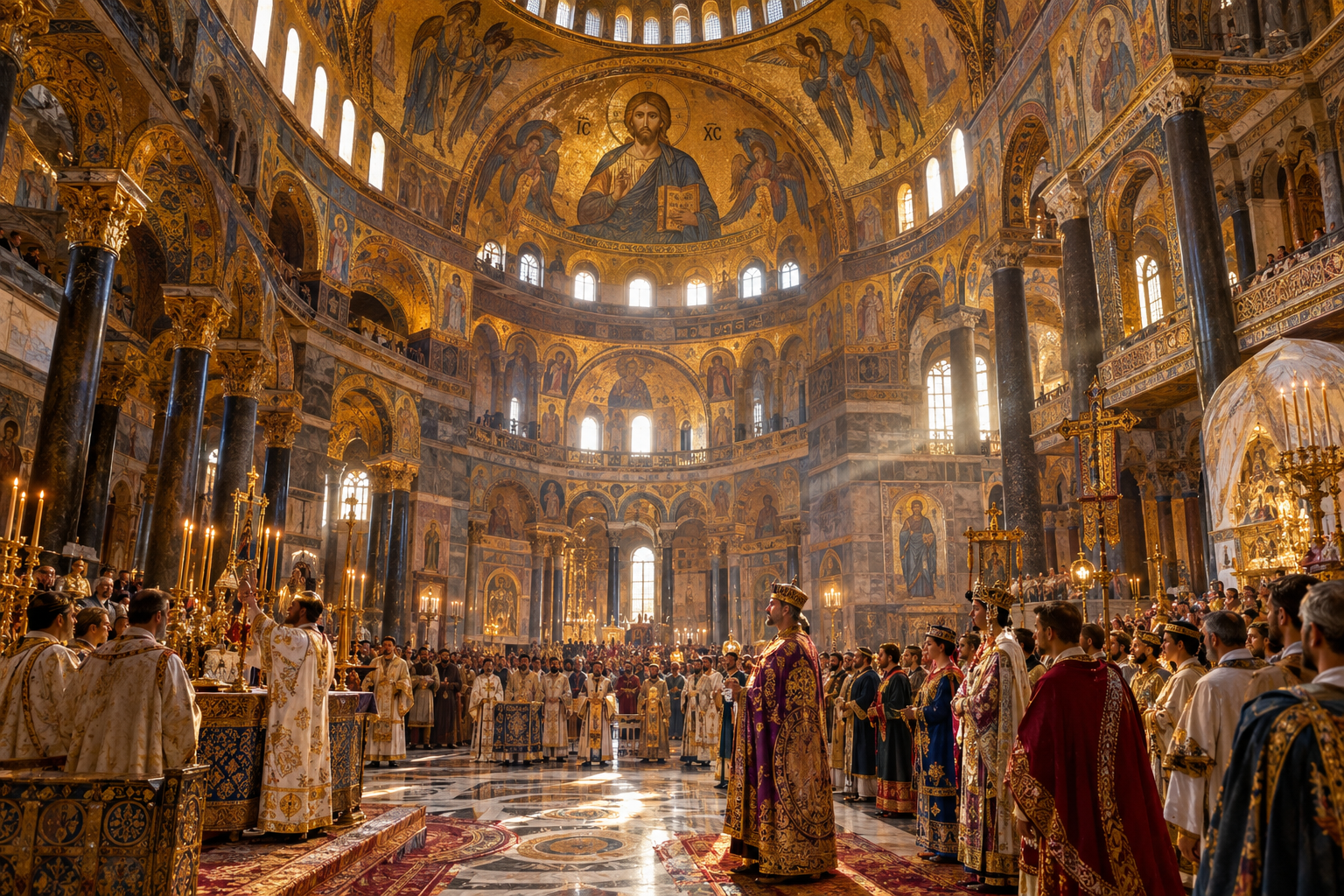
Religion also gave gold an increasingly important role. Christian churches and monasteries used gold for crosses, icons, manuscripts, reliquaries, mosaics, chalices, and other sacred objects. In the Byzantine world, gold backgrounds in religious art created an otherworldly visual effect, suggesting the heavenly rather than the earthly realm. Gold was similarly valued in Islamic societies, royal courts, and Asian civilizations, although religious traditions influenced how and where it was used. Across many cultures, gold remained connected with light, authority, sacredness, and permanence.
Gold also traveled through the enormous commercial networks of the medieval world. African gold from regions south of the Sahara entered North African and Mediterranean trade routes, while merchants connected Europe with the Middle East and Asia. Gold was not equally abundant everywhere, and its scarcity helped maintain its high value. Medieval rulers accumulated treasure as a demonstration of power, while merchants used precious-metal coins for long-distance commerce. By the end of this era, gold had become a truly international substance, linking kingdoms, religions, and trading civilizations across continents.