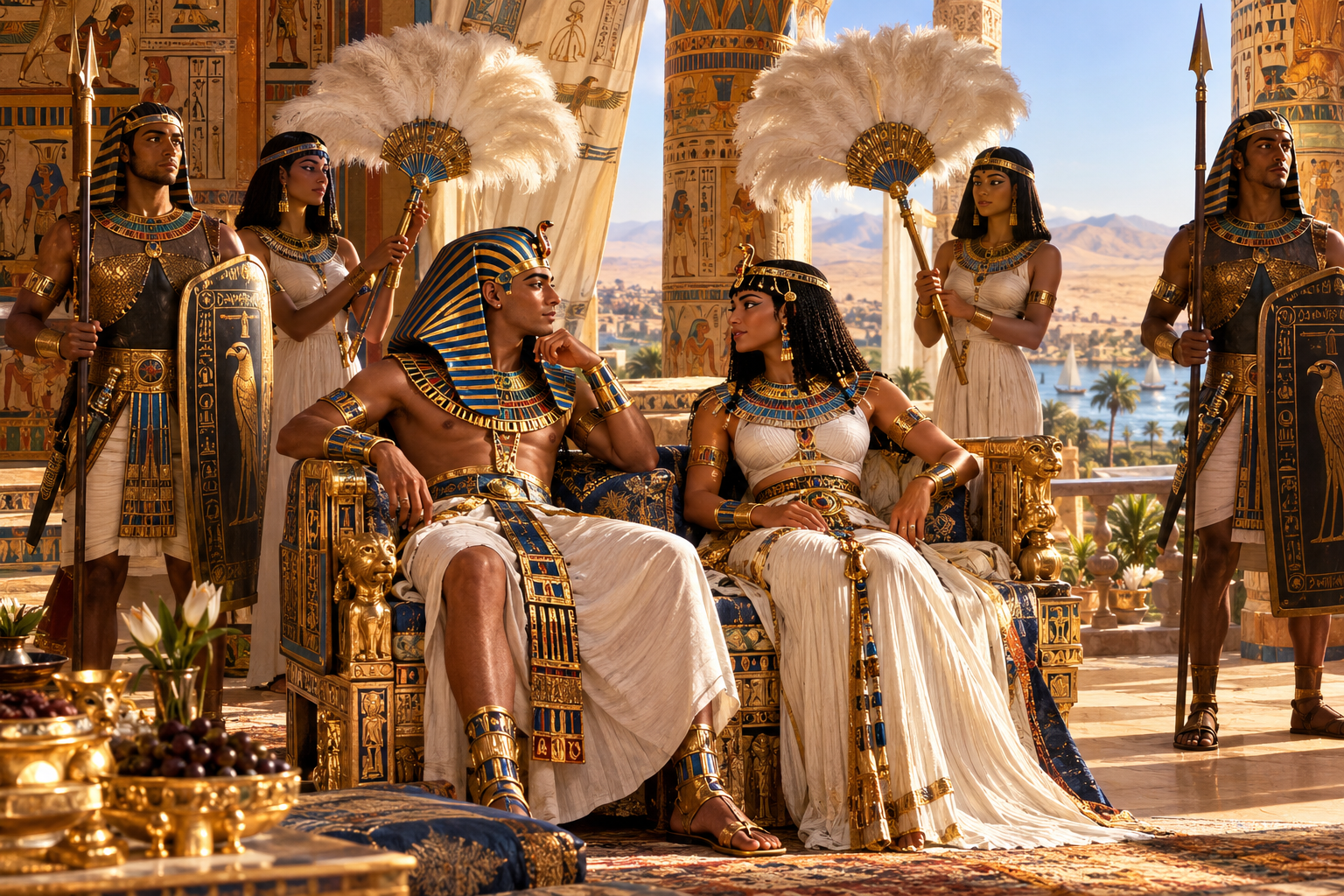
During the second millennium BCE, Egypt became one of the world's great centers of gold production and craftsmanship. The Eastern Desert and Nubia supplied enormous quantities of the metal, and Egyptian rulers regarded gold as an essential resource of royal power. Mining was difficult and dangerous, particularly in remote desert regions, but organized expeditions could exploit quartz veins and alluvial deposits. Ancient miners used stone tools, crushing techniques, fire-setting, and washing methods to extract gold from difficult geological environments.
Gold became inseparable from the image of the Egyptian pharaoh. Royal crowns, necklaces, bracelets, rings, ceremonial objects, coffins, and funerary masks were produced using gold or gold decoration. The famous funerary mask of Tutankhamun, created in the 14th century BCE, is one of the most recognizable surviving examples of Egyptian royal goldwork. Egyptian gold was also used in temples and religious objects, reflecting the belief that the material possessed qualities appropriate to the gods. The metal's resistance to tarnishing made it particularly suitable for objects intended to survive for eternity.
Egypt was not the only civilization fascinated by gold. The Minoans of Crete, the Mycenaeans of mainland Greece, civilizations of the Levant, and cultures of the wider Mediterranean all developed sophisticated goldworking traditions. Mycenaean tombs produced spectacular masks, ornaments, weapons decorated with precious materials, and other objects associated with elite status. Farther east, gold was also being worked in Persia and Mesopotamia. Across the ancient world, gold increasingly communicated the same universal ideas: power, wealth, divine favor, permanence, and the extraordinary status of its owner.