The Classical and Hellenistic worlds transformed gold into an important instrument of international power. Greek rulers used gold and silver coinage to pay soldiers, conduct trade, and finance governments. Alexander the Great inherited the monetary traditions of the Greek world and created standardized coinage across his enormous empire. His gold staters carried consistent weights and designs, helping establish a common monetary language across territories stretching from Greece toward Egypt and Asia.
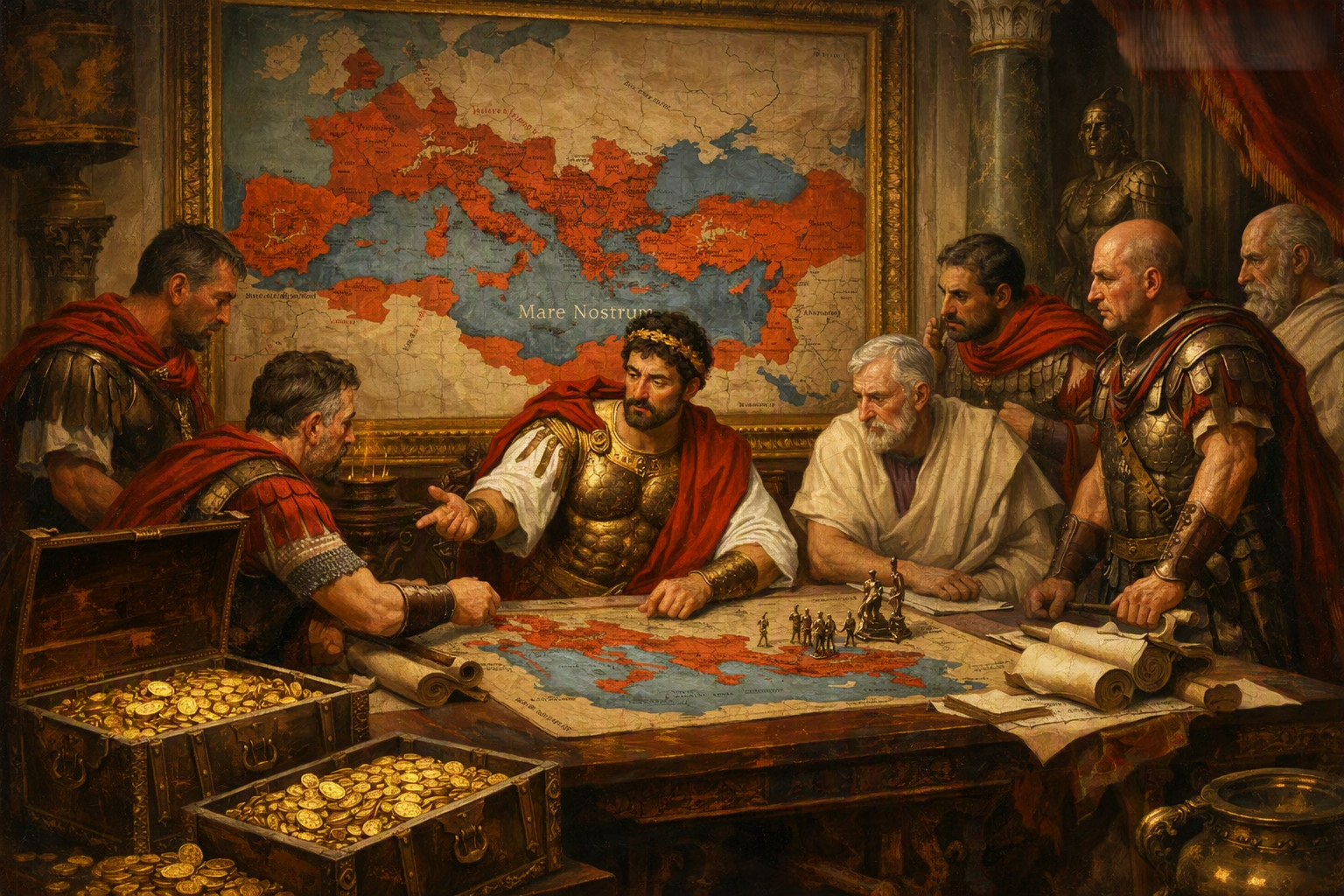
Rome eventually inherited and expanded this monetary system. Gold became particularly important for imperial finance and military payments. The Roman aureus was a major gold coin, and the emperor controlled its production. Roman armies operating across Europe, North Africa, and the Middle East required enormous financial resources, and precious-metal coinage helped sustain the imperial system. Roman mining expanded into territories such as Spain, where large operations extracted enormous quantities of gold. At Las Medulas, the Romans used hydraulic mining, directing large volumes of water against hillsides to expose gold-bearing deposits.
Gold also remained a symbol of luxury and prestige throughout the Roman world. Jewelry, statues, religious objects, imperial gifts, and decorated weapons demonstrated wealth and status. In Egypt, which became part of the Roman world after the conquest of Cleopatra and Mark Antony, goldworking continued while Roman techniques and fashions influenced local production. By the fifth century CE, gold had become deeply embedded in the political and economic systems of the Mediterranean. The fall of the Western Roman Empire in 476 CE did not end gold's importance; instead, it passed into the hands of the civilizations that followed Rome.