Between the eleventh and fifteenth centuries, gold became increasingly connected with the expansion of trade and the search for new sources of wealth. European economies gradually became more commercially active, while Mediterranean merchants established connections with North Africa, the Middle East, and Asia. Gold from West Africa was especially important. The Ghana Empire, Mali Empire, and later Songhai controlled or participated in trade networks that connected gold-producing regions with markets across the Sahara. Gold traveled north in exchange for salt, textiles, horses, and other goods.
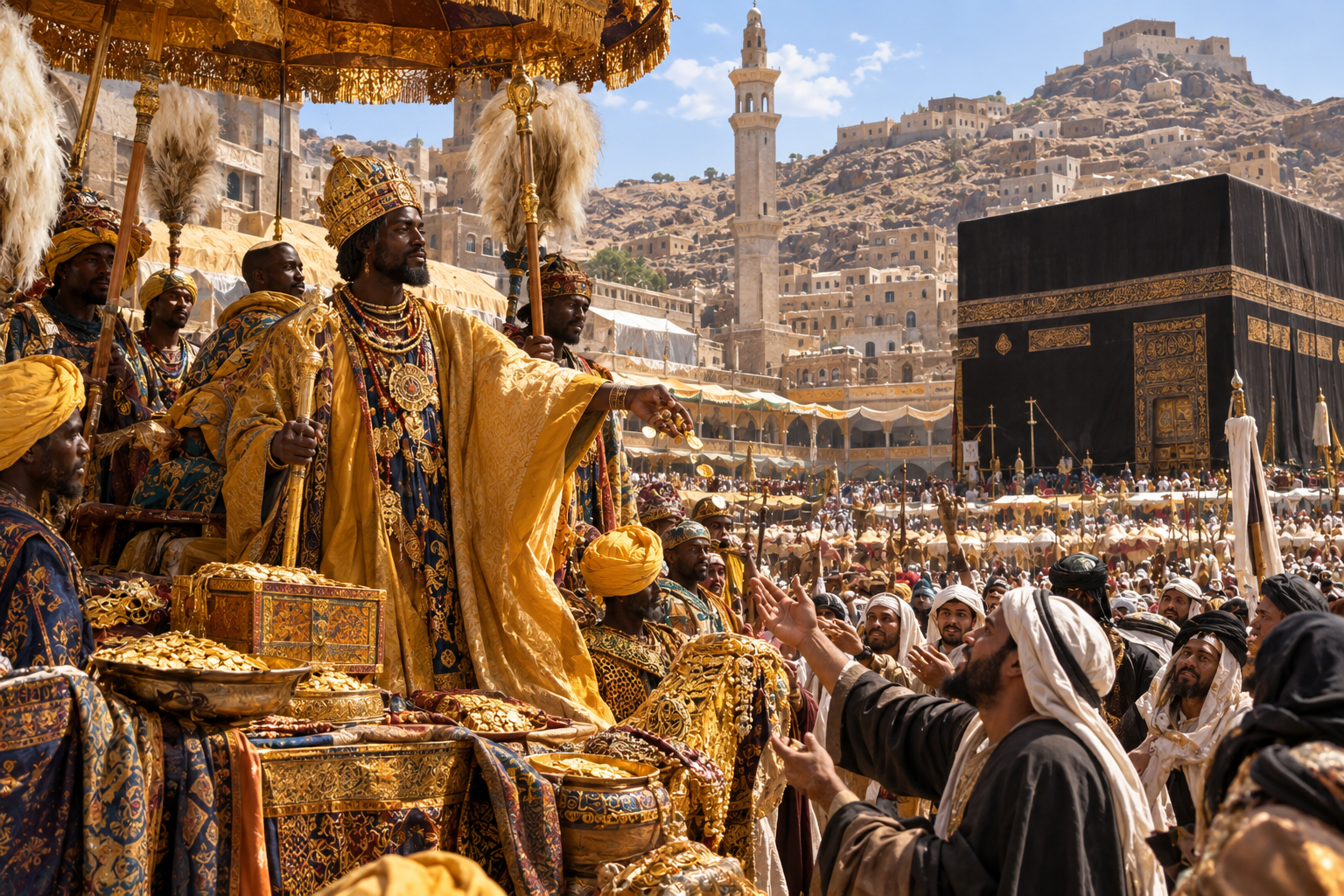
One of the most famous figures associated with medieval African gold was Mansa Musa, ruler of the Mali Empire in the fourteenth century. His pilgrimage to Mecca in 1324–1325 became legendary because of the enormous quantity of gold he reportedly distributed along the journey. His wealth demonstrated the importance of West African gold to the wider medieval economy. European and Middle Eastern scholars and merchants became increasingly aware of the riches of West Africa, strengthening the European desire to gain direct access to African trade.
At the same time, European states developed increasingly sophisticated financial institutions and precious-metal markets. Gold coins circulated alongside silver and other forms of money, while rulers sought new sources of bullion to strengthen their treasuries. By the late medieval period, Portuguese and Spanish maritime expansion was beginning to reshape global trade. The search for gold, spices, trade routes, and territory would soon lead European powers across the Atlantic, beginning a dramatic new chapter in gold's history.