Between roughly 1000 and 500 BCE, gold became increasingly important to expanding kingdoms and empires. Gold moved through trade networks connecting the Mediterranean, Near East, Africa, and Asia. The Phoenicians traded precious metals and other goods across the Mediterranean, while gold from regions such as Spain became an important commercial resource. In the ancient world, control of gold-producing territory could strengthen a ruler's treasury, finance military campaigns, and increase the prestige of the state.
One of the greatest transformations occurred in Lydia, in western Anatolia. Around the seventh century BCE, Lydian rulers began producing coins from electrum, a naturally occurring alloy of gold and silver. Later, under King Croesus in the sixth century BCE, Lydia introduced standardized gold and silver coinage. These coins had consistent weights and metal content, making them easier for merchants to trust and exchange. This was a crucial step in the history of gold: the metal was moving from being primarily an object of wealth into becoming standardized money.
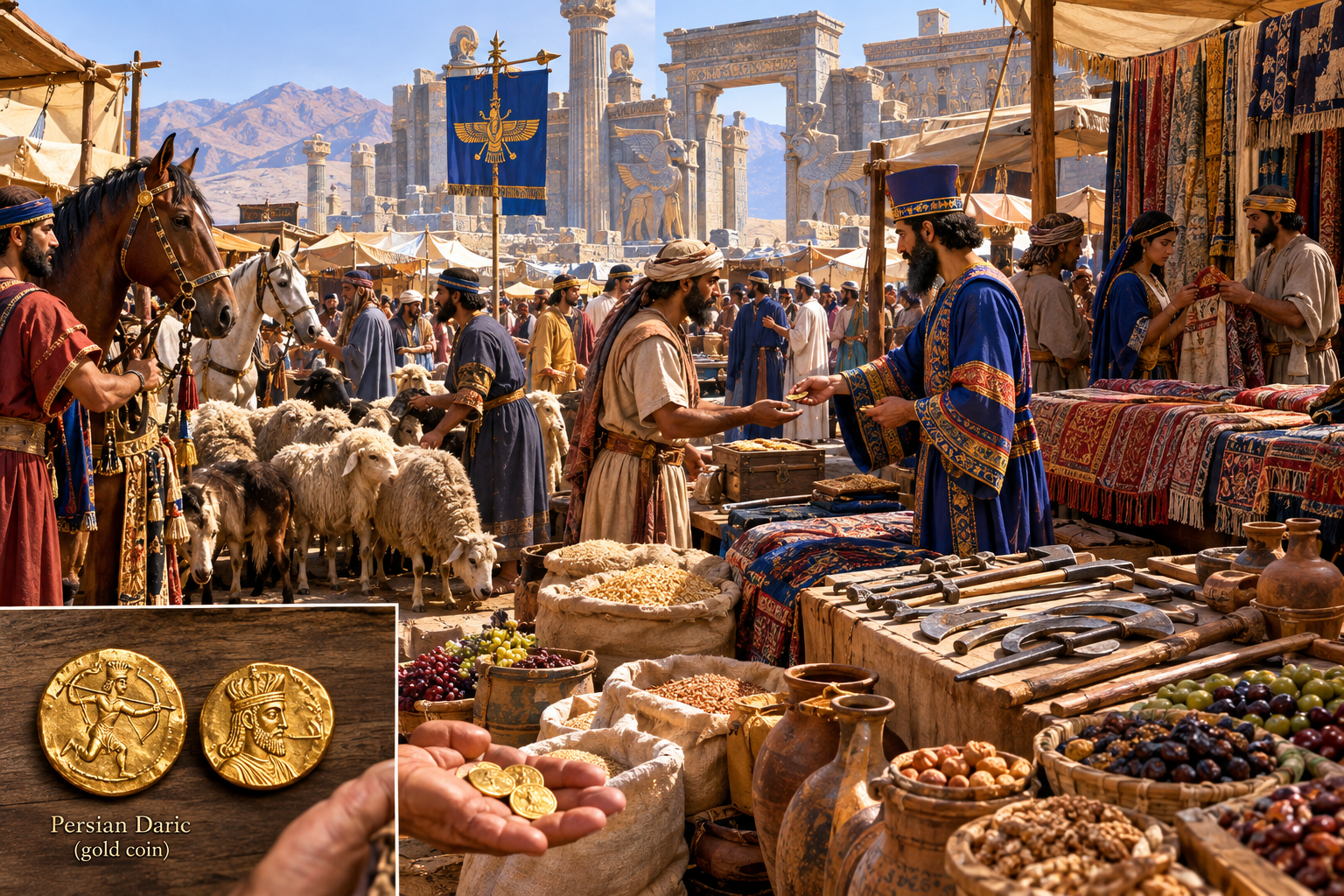
The importance of Lydian coinage spread rapidly. When the Persian Empire conquered Lydia, the Persians adopted and expanded the use of gold coinage. Gold could now travel with armies, merchants, diplomats, and traders in a standardized form. The famous Persian daric became an important gold coin of the Achaemenid Empire. Gold was no longer simply something that kings possessed; it was becoming something that could measure value and facilitate commerce. The foundation had been laid for one of gold's most important roles throughout later history: money.